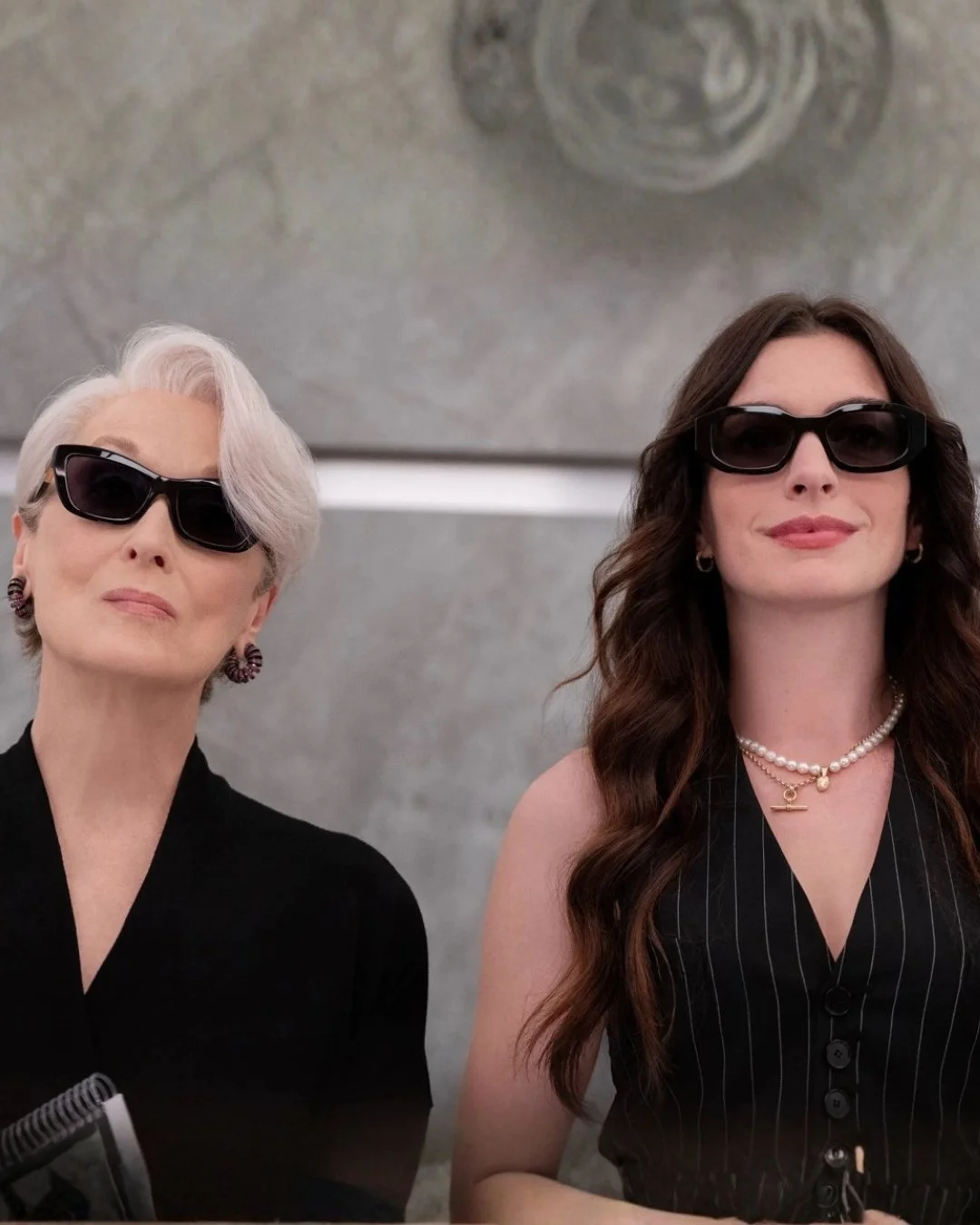
The Devil Wears Prada was never just about fashion
Miranda’s passion for her work is a statement in itself.
I’m convinced that The Devil Wears Prada has influenced far more people than we tend to realize — and not just fashion enthusiasts.
Back in 2006, it opened a window into a world that had always felt inaccessible, almost elite. A film capable of moving us and making us dream.
Twenty years later, the sequel shows us something quite different: journalists struggling to keep up, McKinsey consultants brought in to rescue a company, economy-class flights.
A portrait that feels uncomfortably realistic.
And yet one scene lingers — the one in which Miranda confesses to Andrea her endless love for her work. Rarely do we see women portrayed on screen as passionate, fulfilled, and genuinely energized by positions of power and responsibility. Women who are not defined solely as wives or mothers, but who carry ambition, talent, and the ability to achieve their goals.
That kind of work still exists.
It exists in late-night decisions before a sensitive announcement. In the instinct that unlocks a stuck positioning. In the perfect line after ten different versions. In relationships carefully built over years that, at just the right moment, turn into decisive coverage.
It is a controversial, fast-paced, sometimes chaotic kind of work. But it is also deeply alive.
Studio JITI exists for this — for those who need partners who understand the stakes of reputation. For complex projects, urgent strategic challenges, narratives that reshape brands.
Where governance meets vision.
Where discipline meets passion.
—
STUDIOJITI Strategic Communications