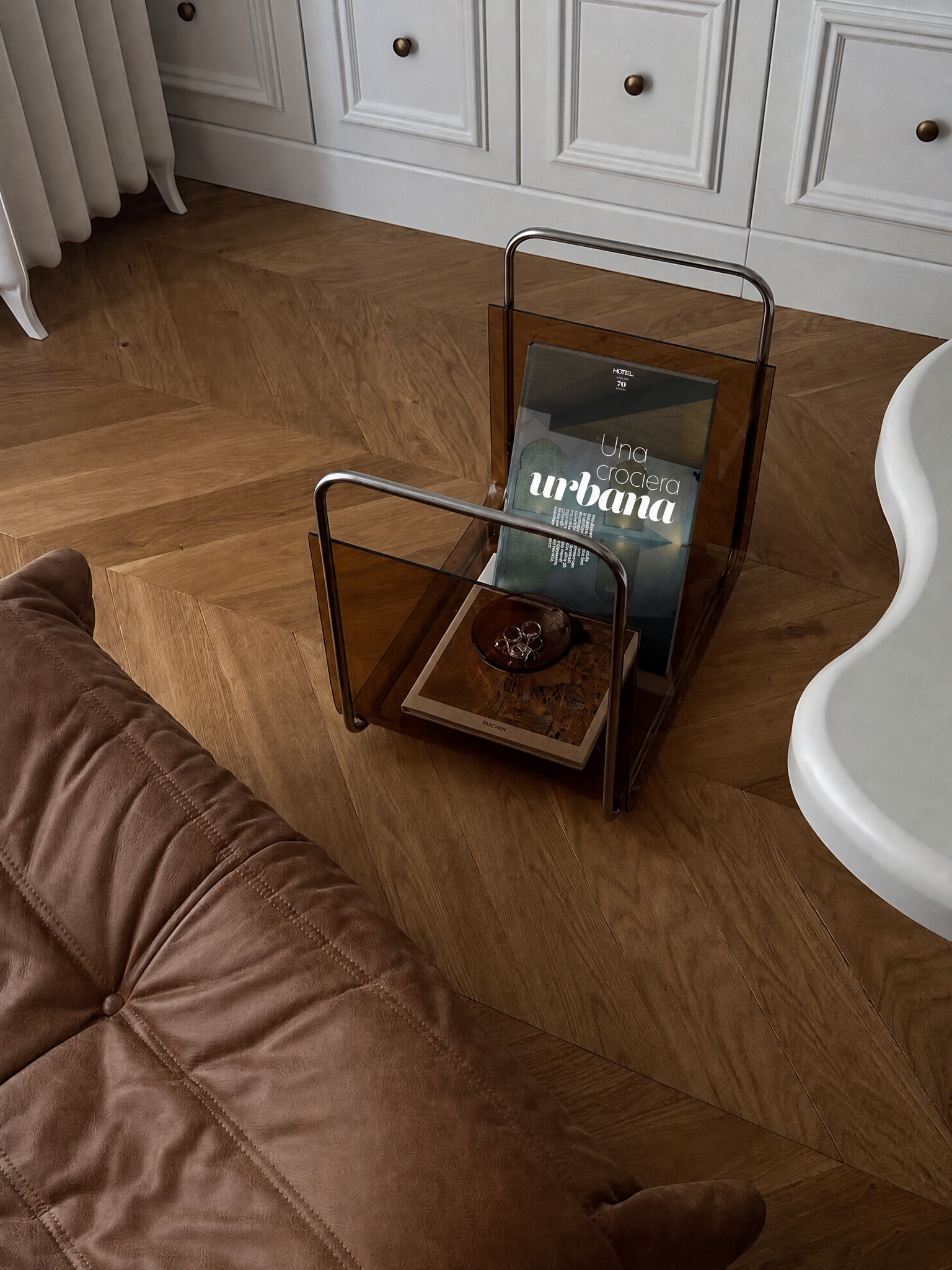
Hotel Domani devotes seven pages to the smart district designed by architect Joseph Di Pasquale — born of research conducted with Milan's Politecnico into the evolution of contemporary lifestyles — and to the two anchors that define its identity: the ChorusLife Immersive Spa and the Radisson Blu Hotel Bergamo ChorusLife.
The district frames itself as "an urban cruise": low-density building, high-density living, a scheme that holds together arena, residences, hotel, retail and wellbeing without severing its ties to the city around it. At its centre, the spa — 9,000 square metres across indoor and outdoor space, five cultural worlds drawn from Japan, ancient Rome, the Nordic countries, the Himalayas and Morocco — reads not as an amenity bolted onto the hotel, but as a destination in its own right, conceived as a sequence of thresholds before it is ever a list of treatments.
This is precisely the kind of narrative we look for in the projects we take on: not an inventory of what a space contains, but the logic holding it together. A district that grew out of research with the Politecnico di Milano rather than a marketing brief — and reads, in print, as architecture rather than promotion.
Seven pages in a trade title isn't a measure of visibility. It's proof that a story built with rigour finds its own way to the editorial space it deserves.
How much of a project's reputation is decided before it's ever written about?
—
STUDIOJITI Strategic Communications
Narrative as form. Presence as design.